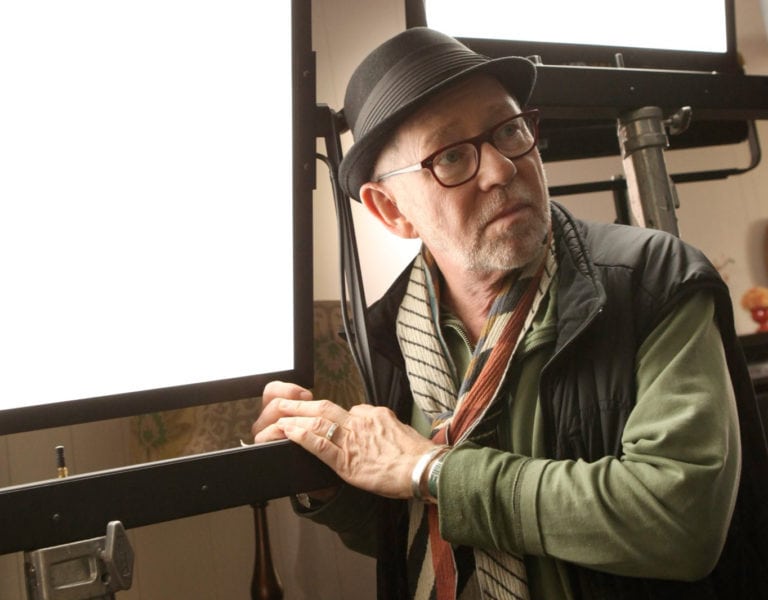

GUIDED BY THE LIGHT
Filmography so far (project title, director, year released)
Feature film- Here Lies (Dir. Duncan Ward, 2016) Best Cinematography winner
Shorts – Mrs & Mr Chips (Dir. Lee Morgan, 2025); The Backway (Dir. Cherno Jagne 2024; Noble Bonds (Dir. Yennis Cheung, 2024); The Shepherd (Dir. Iain Softley, 2023) — second camera, DP John Mathieson BSC; The Last (Dir. Andrew Dobson, 2020); The Drink (Dir. Cosima Spender, 2020); Put Away (Dir. Alice Cooper, 2021); The Date (Dir. Rishi Opel, 2018)
Commercials – Brunello Cucinelli, L’Oreal, Hayu, Dior
When did you discover you wanted to be a cinematographer and what inspired you to follow this career path?
Since my early teenage years, I always had a strong interest in art and photography. Particularly in art and how artists such as Caravaggio, Rembrandt and Edward Hopper used light, shadow and colour as an emotional tool in their compositions. With of course a love for cinema and a fascination with light (and the absence of it), my dad gave me the final nudge to pursue a career in cinematography.
Where did you learn your craft?
I studied at Ravensbourne College. I have also had the fortune of having such amazing mentors along the way including the likes of John Mathieson BSC. John has effectively been and continues to be my film school. Incredibly cliché, but we never stop learning.
What are your favourite films and what makes them stand out to you?
LA Confidential and Heat for their amazing form of storytelling and character building. Both wonderfully executed by Dante Spinotti ASC AIC, who created such vivid, yet naturalistic worlds with the dramaturgy of light and shadow. And also Blade Runner and Apocalypse Now for their colour noir and chiaroscuro approach. Every frame was like witnessing a painting before me. Beautifully lit by Jordan Cronenweth ASC and Vittorio Storaro ASC AIC respectively.
Who in the film world inspires you?
Vittorio Storaro ASC AIC for his philosophical approach to colour. Robert Richardson ASC for his theatrical use of light and shadow while creating such rich, third-dimensional worlds. And of course, John Mathieson BSC. A master at painting with light while understanding and serving the true purpose of the story.

What’s the most useful advice you’ve received and from whom?
“What you don’t see in the shadows, is just as important as what you do see.” John Mathieson BSC.
What advice would you give someone considering becoming a cinematographer?
Keep on shooting and don’t be afraid to be bold and learn from your own mistakes. Continue to test and have a play with a variety of lighting setups for numerous situations. Such setups couldbecome inspiring and get you out of a jam further along the line.
What lights your fire outside of work?
Can I mention watching films? Hahaha…… But along with visiting the exciting photography and art exhibitions London has to offer, this is certainly a wonderful way for me to unwind whileconstantly being inspired by other DPs and filmmakers. I also love to cook. Still trying to master my Poulet à la Normande.
What piece of kit could you not live without?
A Source Four Leko. Whether I am using it to create some room tone, bounce it into some muslin for a soft wraparound key or even for some architectural light, I LOVE that fixture.
Which film would you love to have shot?
Road to Perdition. A beautifully lit and crafted film by the late Conrad Hall ASC. His combination of hard and soft light while serving the story was masterful.
Which productions are you most proud to have lensed and why?
My first feature film, Here Lies, which gave me the opportunity and understanding of true collaboration within a team. Although it was my first feature, the director gave me such trust and I was incredibly thankful for that as it put me at ease while I was able to concentrate on lighting the sets and the actors.
What’s the best and worst thing about your job?
It is incredibly fortunate to be doing what one’s passion in life is as a career, while also filming in other environments and experiencing diverse cultures. However, at times it is easy to forget that it is also a living and therefore there is the constant worry of when the next gig will be.

How would you best describe your approach to cinematography?
The narrative is the most essential element of any given film. I read a script at least six times to submerge myself into the story. Only then do I start to think about the cinematography and how light, shadow and colour can interplay with the narrative along with the emotional journeys of the characters. I see it as somewhat of a “poetic realism” approach.
What are your aspirations for the future?
I would love to shoot more long form. Film and cinema have always been my goal and what touches the soul.
What do you think are the industry’s biggest challenges?
I feel that with budgets being squeezed it is becoming harder and harder for indie filmmakers to have their vision come to light. The middle ground budgets for independent films seems to be fading and therefore more challenging than ever to climb the ladder and get on board your bigger films with bigger budgets.
Also… AI. Need I say more?